Autonomous e-bus for Munich: MAN and MVG bring autonomous driving to city traffic
- Following successful tests, trials on public roads are set to begin
- The necessary approvals have been granted by the TÜV and the federal authority for road traffic Kraftfahrt-Bundesamt (KBA)
- Pilot operations with selected test users are scheduled to begin in November
- The MINGA research project reaches an important milestone on the path to autonomous public transportation
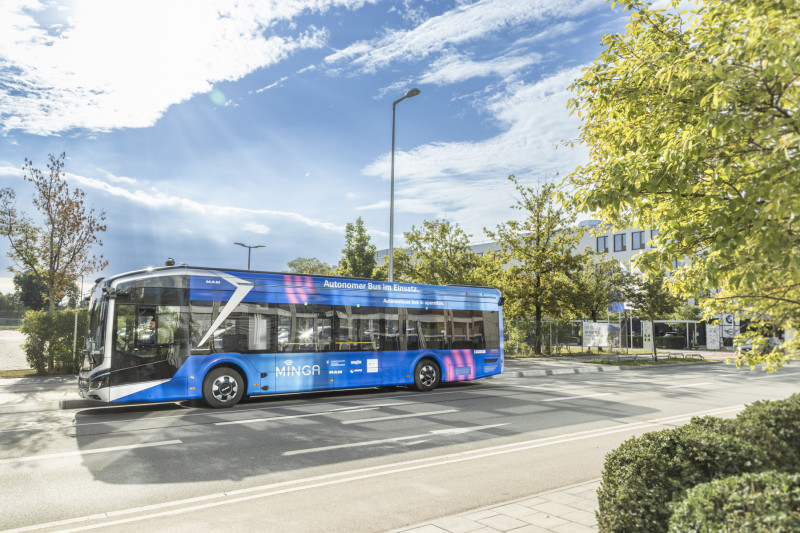
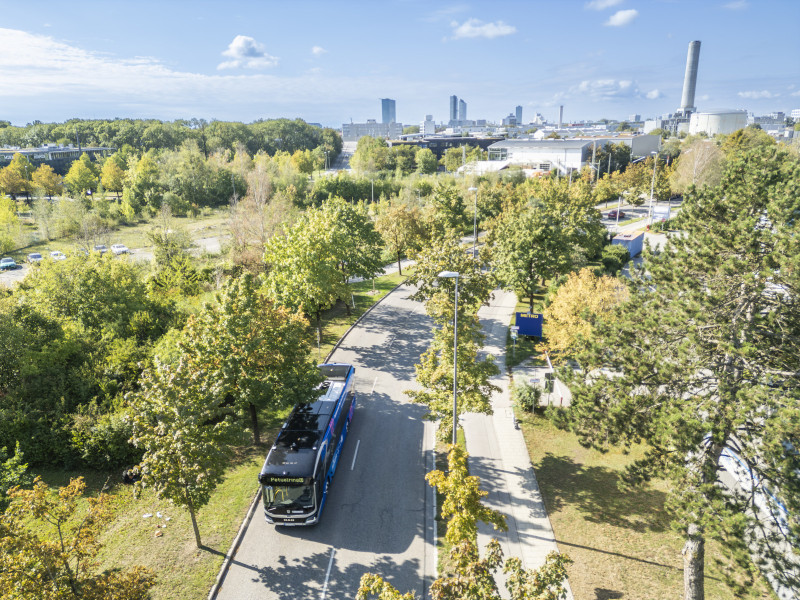
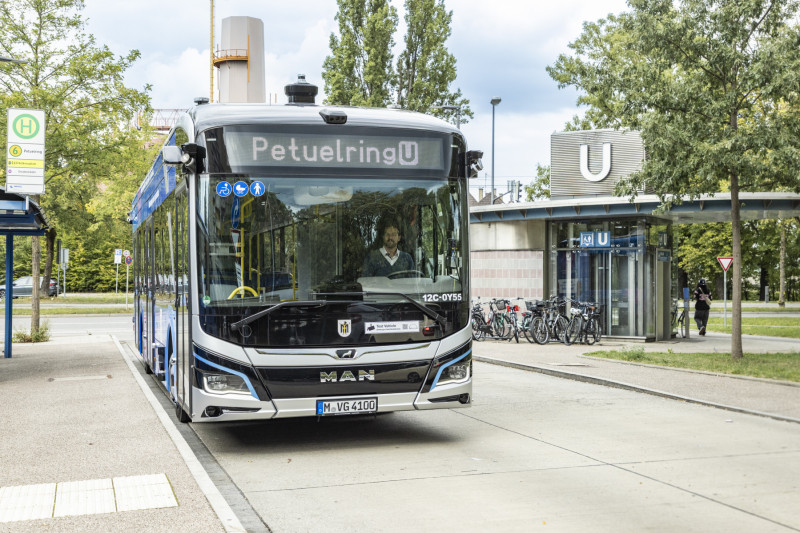
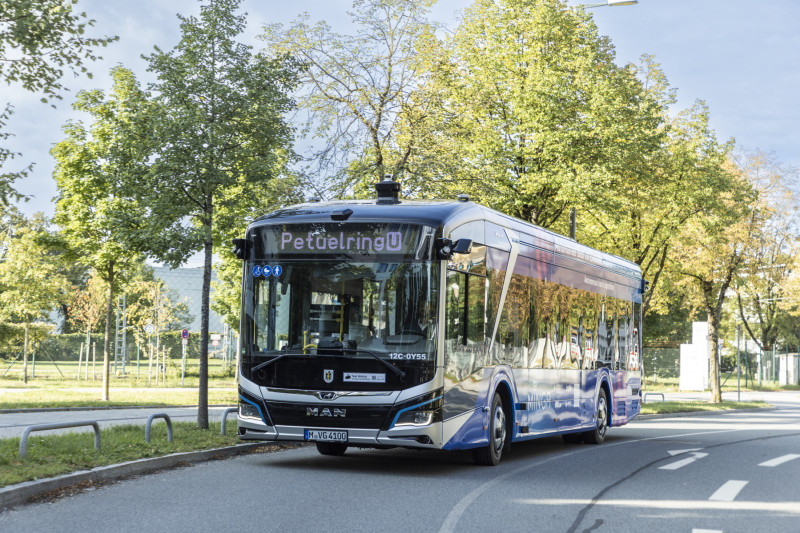
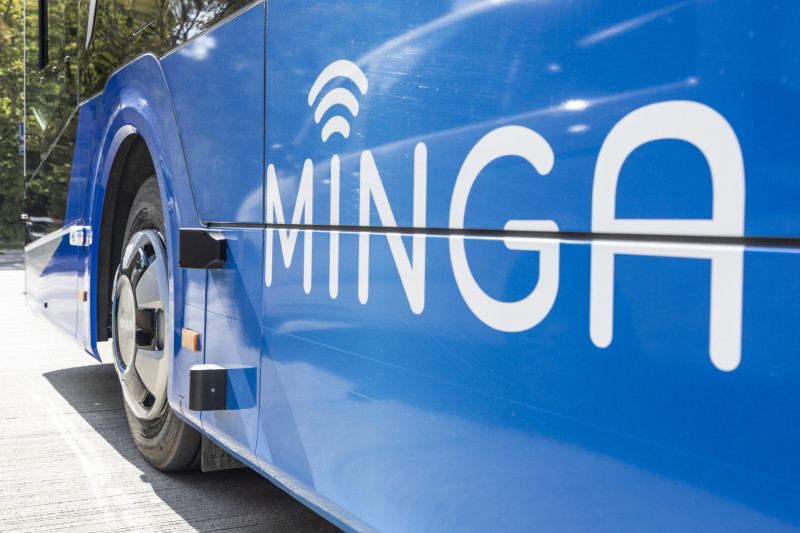
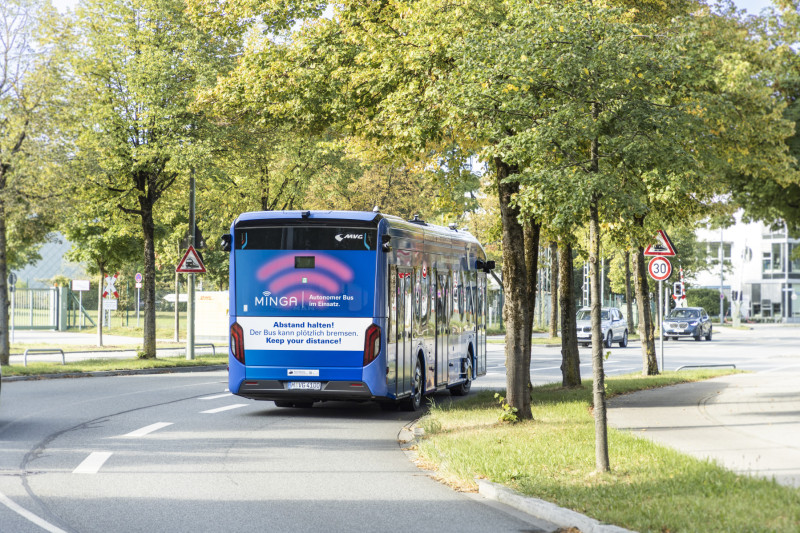
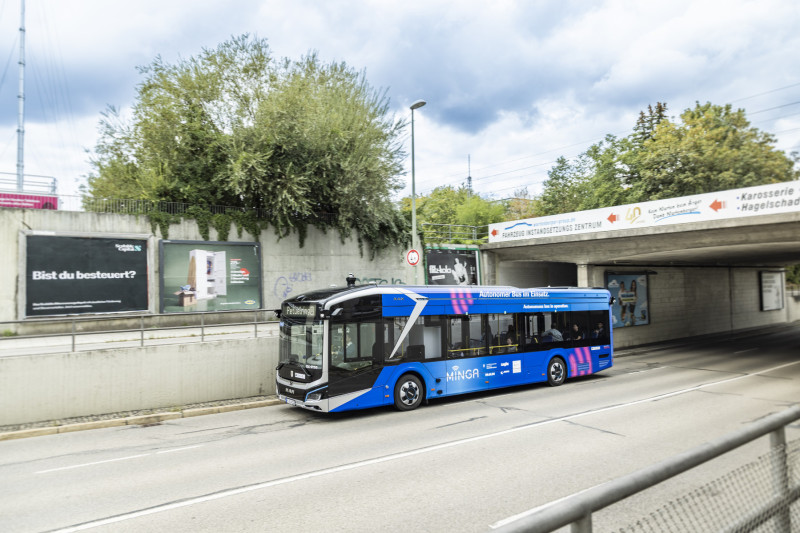
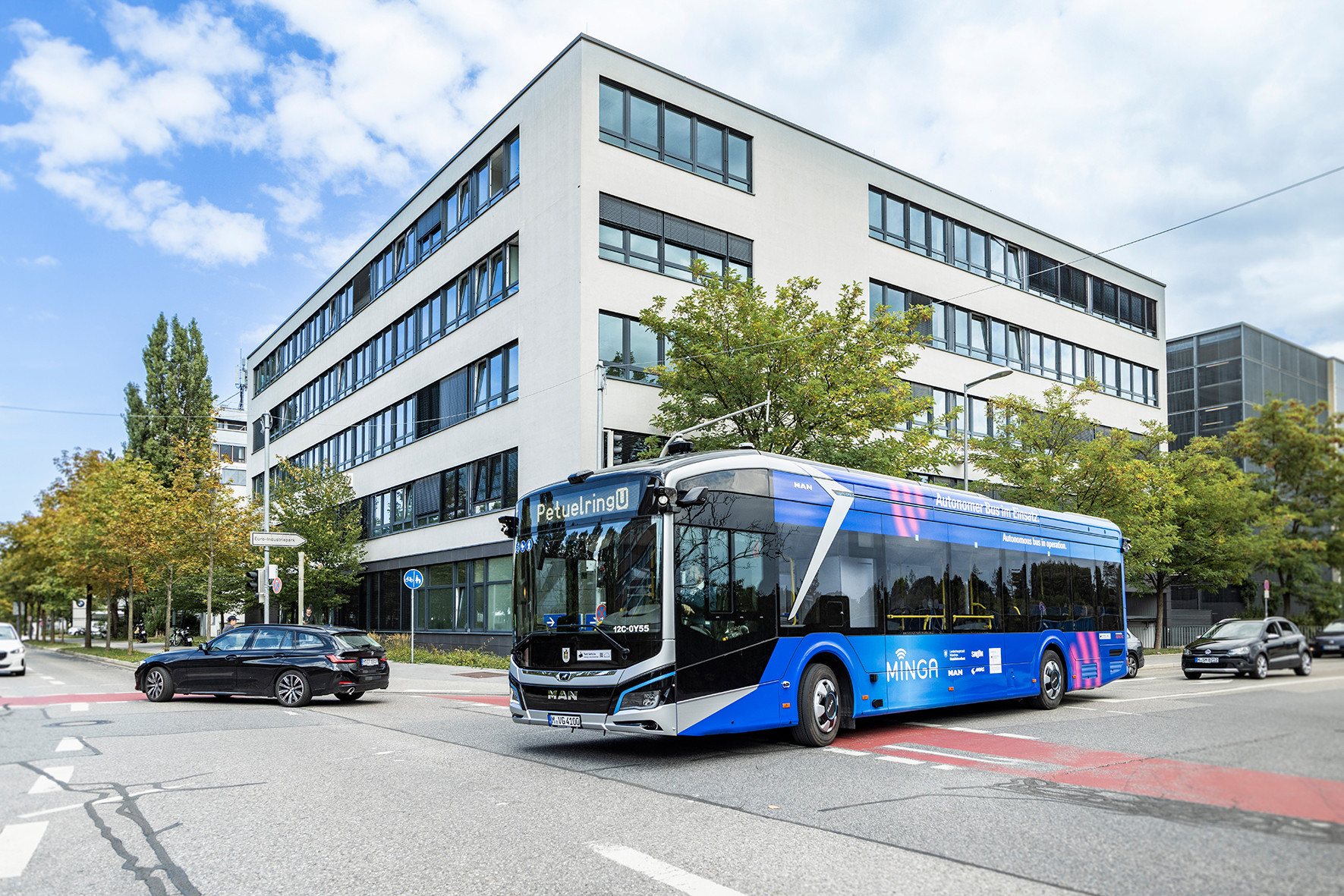
What was long considered a vision of the future is now a reality in Munich: an autonomous city bus for public transport. As part of the MINGA research project, MAN Truck & Bus and Stadtwerke München (SWM), in collaboration with Münchner Verkehrsgesellschaft (MVG) and under the leadership of the Mobility Department of the City of Munich, have reached a decisive milestone. Since early September, the automated MAN Lion’s City 12 E has been operating for the first time on Route 178 between Petuelring and Freimanner Hölzl. This marks the first time the 12-meter-long city bus – which was automated by MAN and its technology partner ADASTEC – has been visible to the public in city traffic.
The bus is currently still accompanied by specially trained test drivers from MAN and MVG. In the coming weeks, extensive route data will be collected to lay the groundwork for increasingly autonomous operation. Throughout the entire project, safety drivers will be on board at all times, ready to take immediate control of the vehicle if necessary.
Christian Hirte, Parliamentary State Secretary to the German Federal Minister of Transport: “Autonomous mobility will be part of our transportation system of the future. It is crucial that we test it under real-world conditions and gain experience for its practical application. With the start of the next test phase, an autonomous solo bus will be operating on public roads in Munich for the first time. The MINGA project is thus reaching another milestone and demonstrating how autonomous vehicles can meaningfully complement public transportation in the future and make it more flexible. We are supporting this development with approximately 13 million euros.”
Georg Dunkel, Head of the Department of Mobility of the City of Munich: “With the autonomous 12-meter bus we’re now putting on the road, we’re taking an important step toward the regular deployment of autonomous vehicles in public transport. Following the recent launch of an autonomous on-demand shuttle in Munich, this marks another important milestone in the further development of urban mobility. I’d like to thank all our partners, especially MAN and MVG, for their close collaboration and dedication. The MINGA project demonstrates how innovation emerges right here on the ground and is shaping the future of mobility in Munich.”
“With the first test runs on the route, we’ve left the controlled environment of our factory grounds and are bringing our system into real city traffic. This is an enormously important step toward automated urban mobility,” says Barbaros Oktay, Head of Bus at MAN Truck & Bus.
Sinaida Cordes, Authorized Signatory at SWM and MVG: “The insights from the MINGA project are of great importance to MVG as a public transport operator. They help us better understand the possible applications of autonomous buses in public transport and assess their potential for passengers and operations. In the long term, we see autonomous vehicles as an opportunity to make public transport even more attractive, flexible, and efficient, thereby making an important contribution to the mobility of the future.”
“Route 178 offers ideal conditions for test operations. It combines a variety of traffic situations, such as major thoroughfares, 30-km/h zones, parking areas, and underpasses. This means it is a good representation of Munich’s diverse bus network. For future regular service, it is crucial to conduct the tests as close to real-world conditions as possible,” adds Veit Bodenschatz, Head of the Bus Division at SWM and MVG.
Route is being digitized for autonomous driving
As part of the current test runs, the route information required for autonomous operation is being collected. “This is necessary because autonomous driving requires a high-resolution and extremely precise map of the route,” explains Marc Raudszus, Technical Coordinator and test driver at MAN.
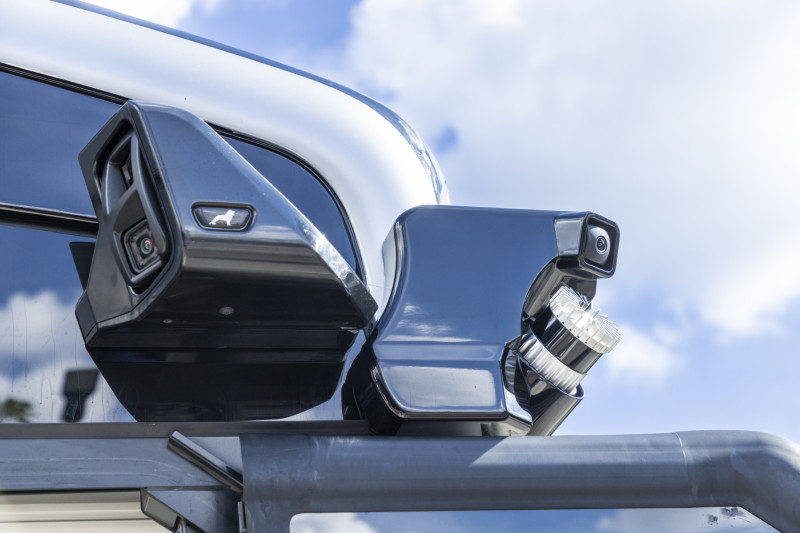
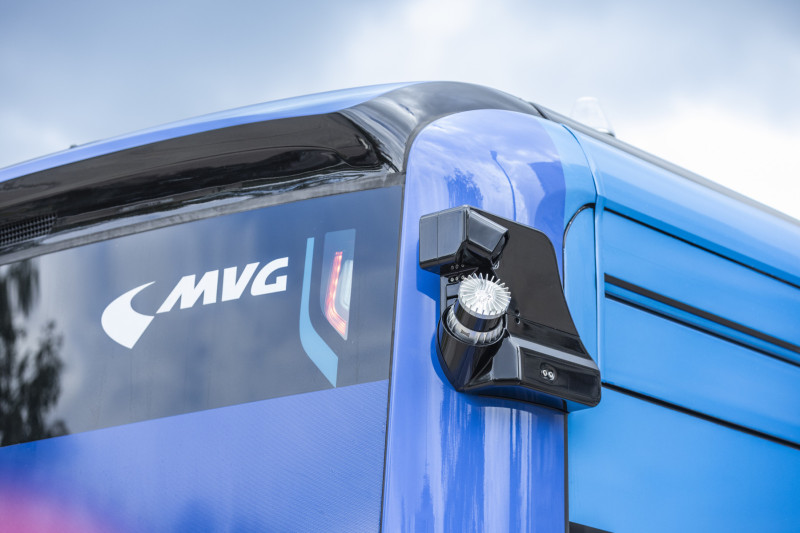
To this end, the vehicle uses state-of-the-art sensor technology to map its surroundings: The bus is equipped with five LiDAR sensors, six radars, eight cameras, and a satellite-based positioning system. From this data, technology partner ADASTEC implements relevant road and traffic information such as traffic lights, pedestrian crossings, lane layouts, and other route-relevant features, within a high-resolution digital map (HD map) that supports precise localization and automated driving along the defined route. This forms the basis for the city bus to drive the route independently and safely in just a few weeks. “Among other things, the vehicle will steer, accelerate, brake, and signal on its own. However, a safety driver will remain on board at all times to monitor the systems,” explains Dr. Michael Roth, Head of Bus Strategy and Bus Product Strategy at MAN.
“Our MAN Lion’s City E is currently collecting data on an ongoing basis and is being further optimized for the planned automated operation,” says Marc Raudszus, adding: “In addition to the technology, the size of the vehicle also poses a particular challenge. This makes it all the more important for us to ensure cautious, restrained driving behavior. After all, in addition to technical maturity, the MINGA project is also about building trust in the new technology.”
Test operation under real-world conditions
MVG and MAN are expected to launch another phase starting in November with test users along Route 178. The bus will be deployed as an additional vehicle on the existing route, simulating future use in regular scheduled service under conditions as close to real-world as possible. During this project phase, selected test users will be able to ride as part of a closed user group. The bus has approximately 30 seats as well as space for a wheelchair or pram. Before being deployed on public roads, the automated electric bus successfully completed an extensive testing program at the MAN facility. This included electromagnetic compatibility testing as well as the validation of all functions of the automated driving system developed by MAN’s partner ADASTEC in a wide range of defined test scenarios. “The top priority was that the safety driver on board must be able to intervene at any time in the event of a potential system failure,” Raudszus emphasizes.
On this basis, the necessary technical inspections by TÜV and other approval procedures were completed. The federal authority for road traffic, Kraftfahrt-Bundesamt (KBA), was responsible for issuing the operating permit in accordance with the AFGBV (Autonome-Fahrzeuge-Genehmigungs-und-Betriebs-Verordnung). “This means that all regulatory requirements for the test operations now underway in Munich’s street traffic have been met,” says Roth.
Registration for rides now open
Interested individuals can already register to participate at mvg.de/minga-anmeldung. MVG will provide separate information regarding the specific start date for the ride-sharing service in due course.
MINGA: A key project for the mobility of the future
MAN’s goal is to use autonomous buses to make local public transportation more efficient, flexible, and sustainable in the future. Autonomous systems thus offer great potential for ensuring and improving mobility services – especially in light of growing cities and an increasing driver shortage. MAN has been working on driverless buses for years. The experience gained from the MINGA project is now being directly incorporated into the further development of future vehicle generations. In the MINGA research project, MAN is working with ADASTEC as its technology partner, relying on a specialized provider of automated driving systems. The company develops SAE Level-4 (fully automated) automated driving software platform for buses and commercial vehicles.
The MINGA research project (Munich’s Automated Local Transport with Ridepooling, Solobus, and Bus Platoons) has been underway since 2023 with a total of 16 partners from public authorities, research institutions, and industry. The Mobility Department of the City of Munich serves as the consortium leader and is responsible for the overall project. The goal is to integrate automated and connected mobility solutions into the existing transportation system and to address key questions regarding technology, regulation, cost-effectiveness, accessibility, and operations. The project is being funded with approximately 13 million euros through mid-2027 by the Federal Ministry of Transport (BMV) under the funding guideline “Autonomous and Connected Driving in Public Transportation.” Further information on the project can be found at mvg.de/minga and muenchenunterwegs.de/minga.