All aboard! MAN and MVG launch autonomous bus rides with test users in Munich
- From 17 November, test users are set to be able to ride in the autonomous MAN eBus
- Rides will run Monday to Friday on MVG route 178 in the north of Munich
- Strong interest: more than 2,000 people have already pre-registered for a ride
- Test operations as part of the MINGA project will run until June 2027
- Passenger experiences are expected to provide important insights for operating autonomous buses
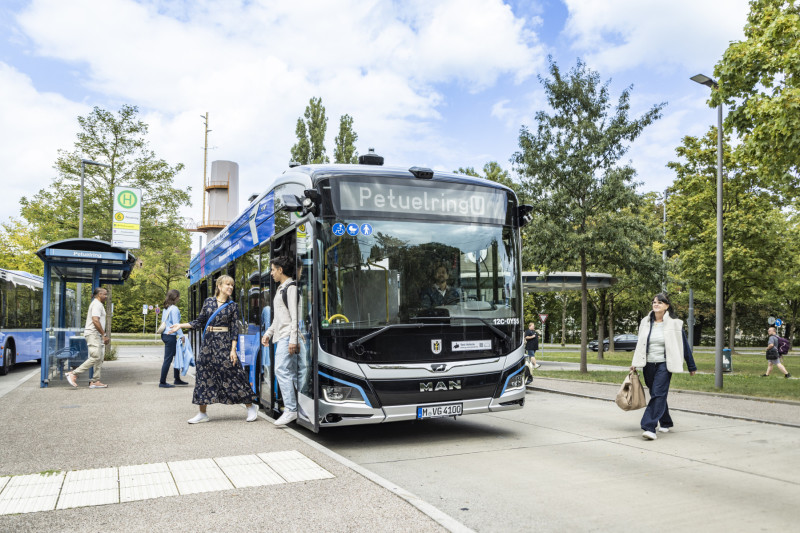
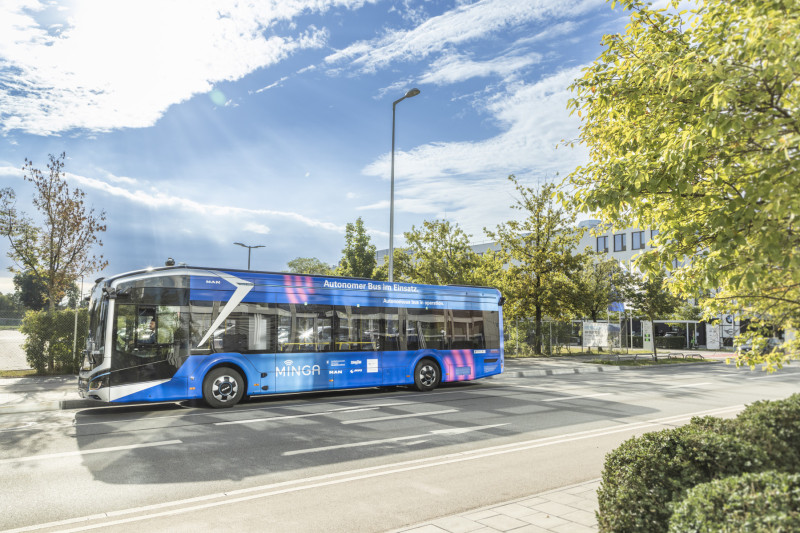
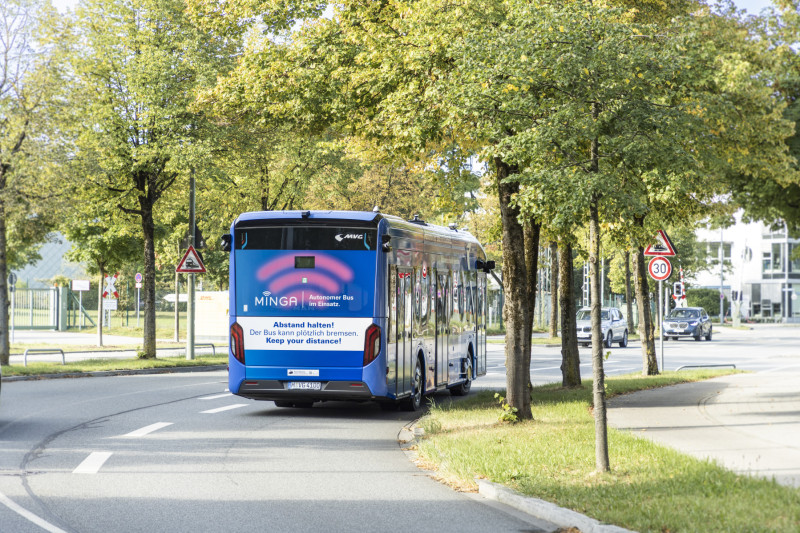
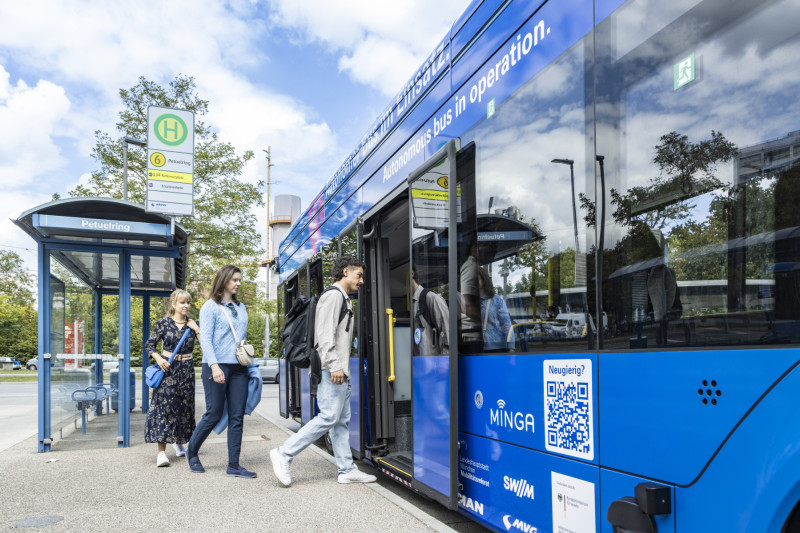
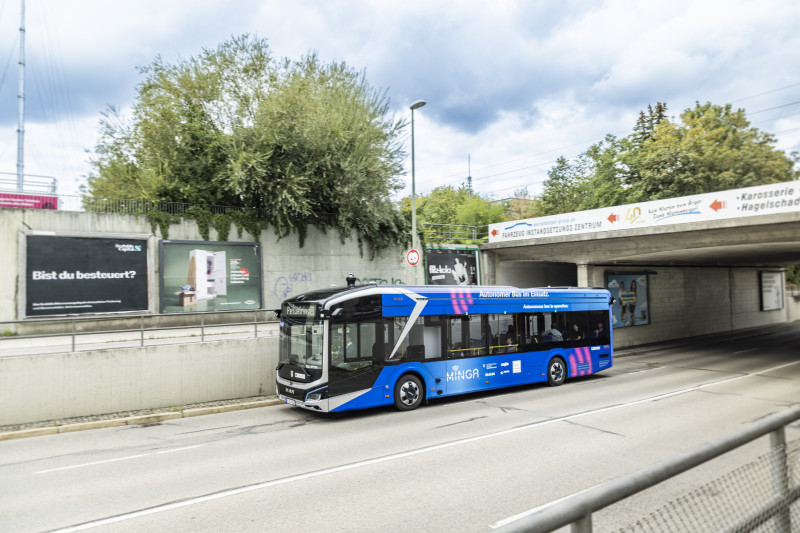
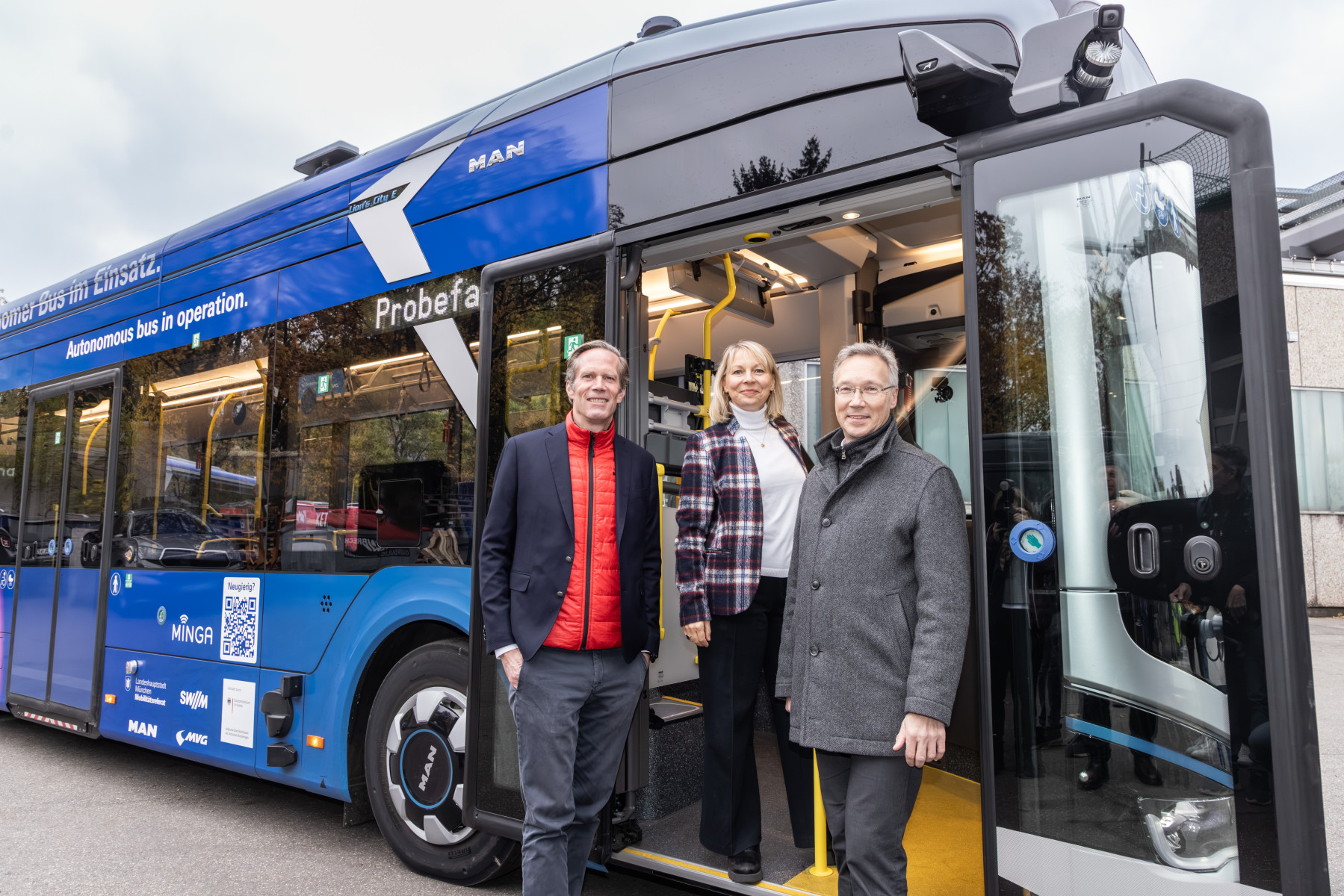
From test operations to passenger experience: since the beginning of September, the automated MAN Lion's City 12 E has been tested in public road traffic on Munich's route 178, and the route has been prepared for autonomous operation. Now the next key phase of the MINGA project is beginning. MAN Truck & Bus, Stadtwerke München (SWM) and Münchner Verkehrsgesellschaft (MVG), together with the City of Munich's Department of Mobility, are starting operations with test users. From 17 November, they are set to be able to ride in the autonomous MAN eBus between Petuelring and Freimanner Hölzl for the first time. The rides will run Monday to Friday. To mark the launch, the MINGA partners invited members of the press to a first public test ride.
German Federal Minister of Transport Steffen Bilger: "Autonomous driving can contribute to high-performance local public transport. That is why we at the Federal Ministry of Transport support innovative projects such as MINGA, which we are funding with around €13 million. Germany is a car nation. Our aim must be to lead the way in buses and new mobility technologies too. What matters is getting innovation onto the road. To do this, manufacturers, transport companies, local authorities and policymakers must move forward together. MINGA shows how this can work in practice."
Munich Mayor Mona Fuchs: “In future, autonomous buses will open up new opportunities for local public transport in Munich. Staff shortages and tight budgets are currently putting day-to-day operations under pressure. Being one of the first German cities to trial a future technology like this sends a strong signal for Munich as a centre of innovation. It is particularly important to me that accessibility is given proper attention in the MINGA project and that passengers themselves are involved. Their experiences and their sense of safety will decide whether this technology becomes part of everyday life. I would like to thank our partners from the federal government, research and industry for working on this with us. I invite the people of Munich to try out the autonomous eBus on route 178 and help shape its development.”
The public is also showing strong interest in the new technology: more than 2,000 people have already pre-registered for a ride in the autonomous MAN eBus. Operations with test users are scheduled to run until June 2027. Until then, interested passengers can ride in the 12-metre MAN Lion's City 12 E, which was automated by MAN and its technology partner ADASTEC. Safety drivers remain on board at all times throughout the project and can take control of the vehicle immediately if needed.
"With the first test rides, passengers can now experience our technology in everyday use. This is a decisive step. Alongside safe and reliable technology, autonomous vehicles also need people's trust, and that is what we want to earn. The experience we gain from the MINGA project will feed directly into the development of future vehicle generations and further applications. As a German commercial vehicle manufacturer, we are glad to be developing this technology in Europe for Europe, and to be carrying out the project with such a professional consortium," says Dr Frederik Zohm, Executive Board Member for Research and Development at MAN Truck & Bus.
"We are delighted that the people of Munich now have the opportunity to play an active part in developing our autonomous bus service. Passenger feedback is very important to us, as it helps us adapt the technology even more closely to users' needs and make local public transport in Munich fit for the future. The next step in the MINGA project is an important milestone towards a reliable and attractive service for everyone. It lays the foundations for maintaining an attractive local public transport service and developing it in line with people's needs. We look forward to the experiences and suggestions the test rides will bring, and we are pleased to be one of the first German cities to introduce an autonomous bus service," says Georg Dunkel, Head of the Department of Mobility of the City of Munich.
"For MVG as a public transport operator, operations with test users are an important step. Technical testing is becoming a service that passengers can experience under real-world conditions. This gives us valuable insights into how autonomous buses can be integrated into local public transport safely, practically and with the customer in mind. The key question for us is whether and how autonomous buses can be scaled up and integrated reliably and cost-effectively into efficient scheduled services in future. With the automated 12-metre bus, we are trialling for the first time a vehicle size that has the potential for high-capacity use in regular bus operations," adds Sinaida Cordes, Authorized Signatory at SWM and MVG.
Register now for a ride on route 178
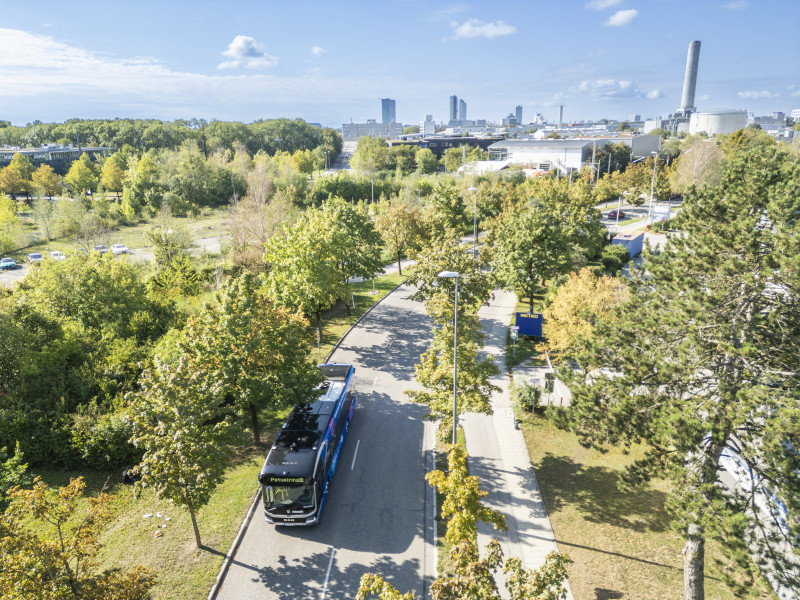
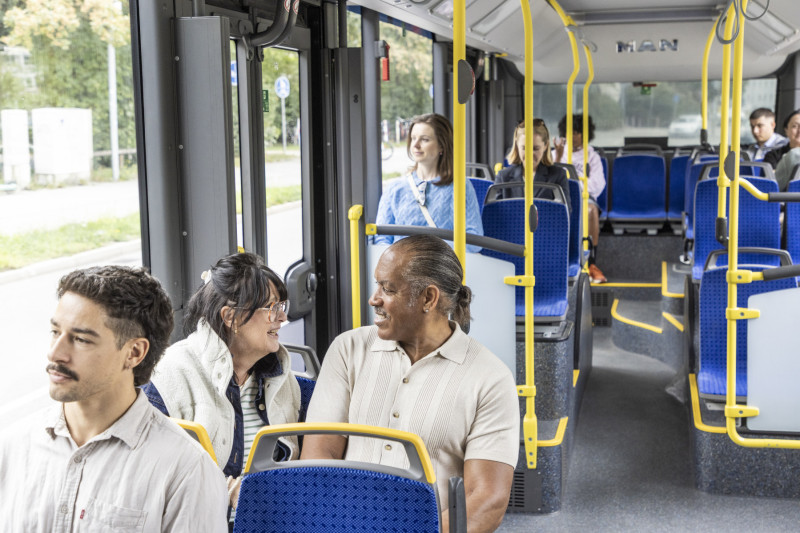
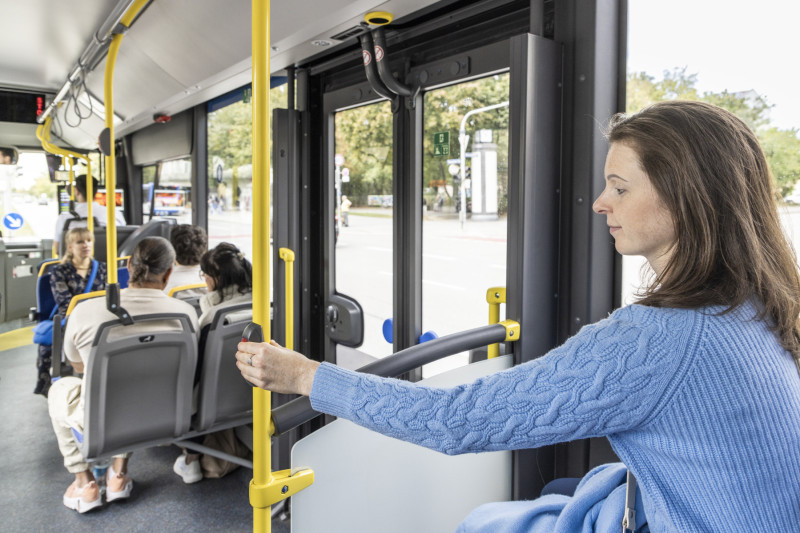
The autonomous eBus runs as an additional vehicle on the existing route 178 and simulates future use in regular scheduled service under conditions that are as realistic as possible. The route is particularly well suited to this, as it combines a range of traffic situations, including main roads, 30 km/h zones, park areas and underpasses, and is therefore a good reflection of Munich's varied bus network. Test users ride as part of a closed user group. The MAN Lion's City 12 E has around 30 seats and one wheelchair space. Anyone interested can register at mvg.de/minga-anmeldung to join a pool of potential participants. Further information will then be sent by email.
Scientific monitoring of test operations
Passenger experiences during the test rides are expected to provide important insights into how autonomous driving systems can be operated in local public transport and how the public responds to them. The Technical University of Munich (TUM) and the University of Stuttgart are providing scientific monitoring of the test operations. Voluntary surveys before and after each ride will record passengers' impressions and their sense of safety, with a particular focus on accessibility. On selected rides, in-depth observational studies and voluntary passenger interviews will also be carried out to assess acceptance of autonomous vehicles and how safe passengers feel in them.
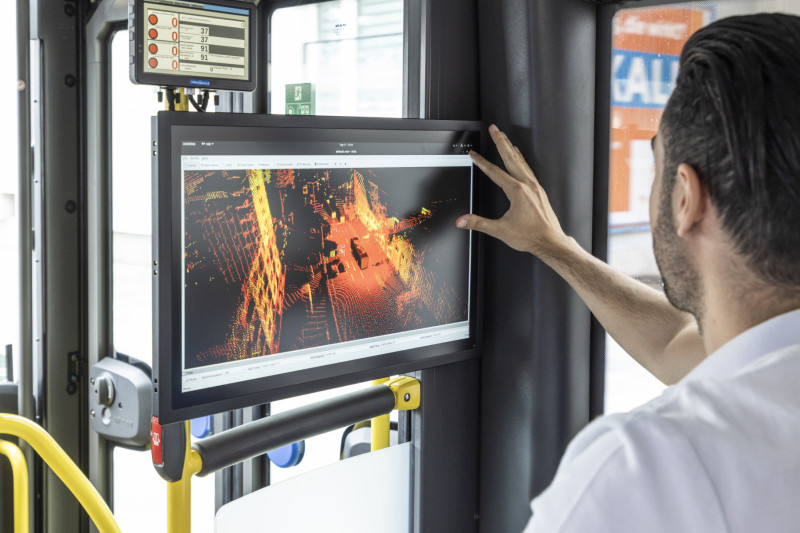
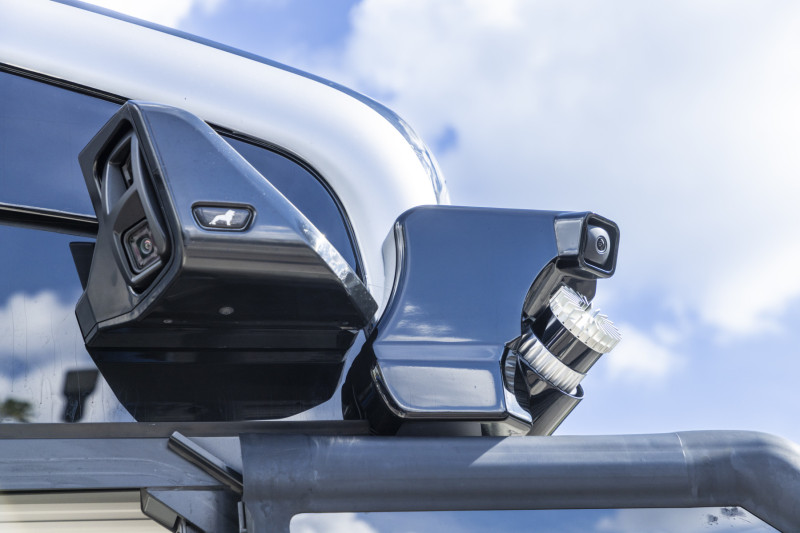
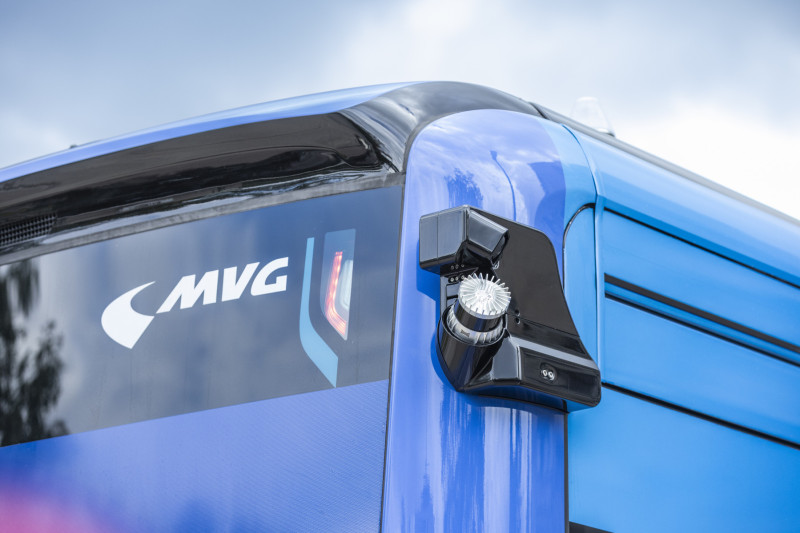
The automated MAN Lion's City 12 E has been running on route 178 since the beginning of September. It is equipped with five LiDAR sensors, six radar sensors, eight cameras and satellite-based positioning. Over the past few weeks, accompanied by specially trained safety drivers from MAN and MVG, it has collected extensive route data. This data is what allows the city bus to now drive the route independently and safely. "Among other things, the vehicle steers, accelerates, brakes and indicates by itself. Safety drivers nevertheless remain on board at all times to monitor the systems," explains Dr Michael Roth, Head of Bus Strategy and Product Strategy Bus at MAN. Before being used in public road traffic, the automated electric bus completed an extensive test programme on the MAN site. It also passed the required technical inspections by TÜV and went through further approval procedures.
Autonomous buses for the mobility of the future
By using autonomous buses, the project partners aim to make the local public transport of the future more efficient, flexible and sustainable. As cities grow and the driver shortage increases, autonomous systems offer great potential for maintaining and improving mobility services. This is why MAN has been working on driverless buses for years. In the MINGA research project, MAN is working with ADASTEC, a specialist provider of automated driving systems, as its technology partner.
SWM and MVG are responsible for integrating the test operations into Munich's bus network. This includes running the rides on route 178, deploying the trained safety drivers, and informing and supporting the test users.
MINGA research project runs until June 2027
Since 2023, the MINGA research project ("Münchens automatisierter Nahverkehr mit Ridepooling, Solobus und Bus-Platoons", or Munich's automated local public transport with ridepooling, solo buses and bus platoons) has brought together the expertise of 16 partners from public administration, research and industry. The City of Munich's Department of Mobility leads the consortium and is responsible for the project as a whole. The aim is to integrate automated and connected mobility solutions into the existing transport system and to answer key questions on technology, regulation, cost-effectiveness, accessibility and operations. The Federal Ministry of Transport (BMV) is funding the project with around €13 million until mid-2027 under the funding guideline "Autonomous and Connected Driving in Public Transport". Further information about the project is available at mvg.de/minga-anmeldung and muenchenunterwegs.de/minga.