
Bidirectional charging of eTrucks: SPIRIT-E research project lays the foundation
Electric trucks can become an active part of the energy system. For market ramp-up, grid connectivity, standards and business models are now the key success factors
· Feasibility demonstrated: Power can be fed back into local and public electricity grids at up to 350 kW
· Electricity trading with eTrucks successfully tested in a trial environment
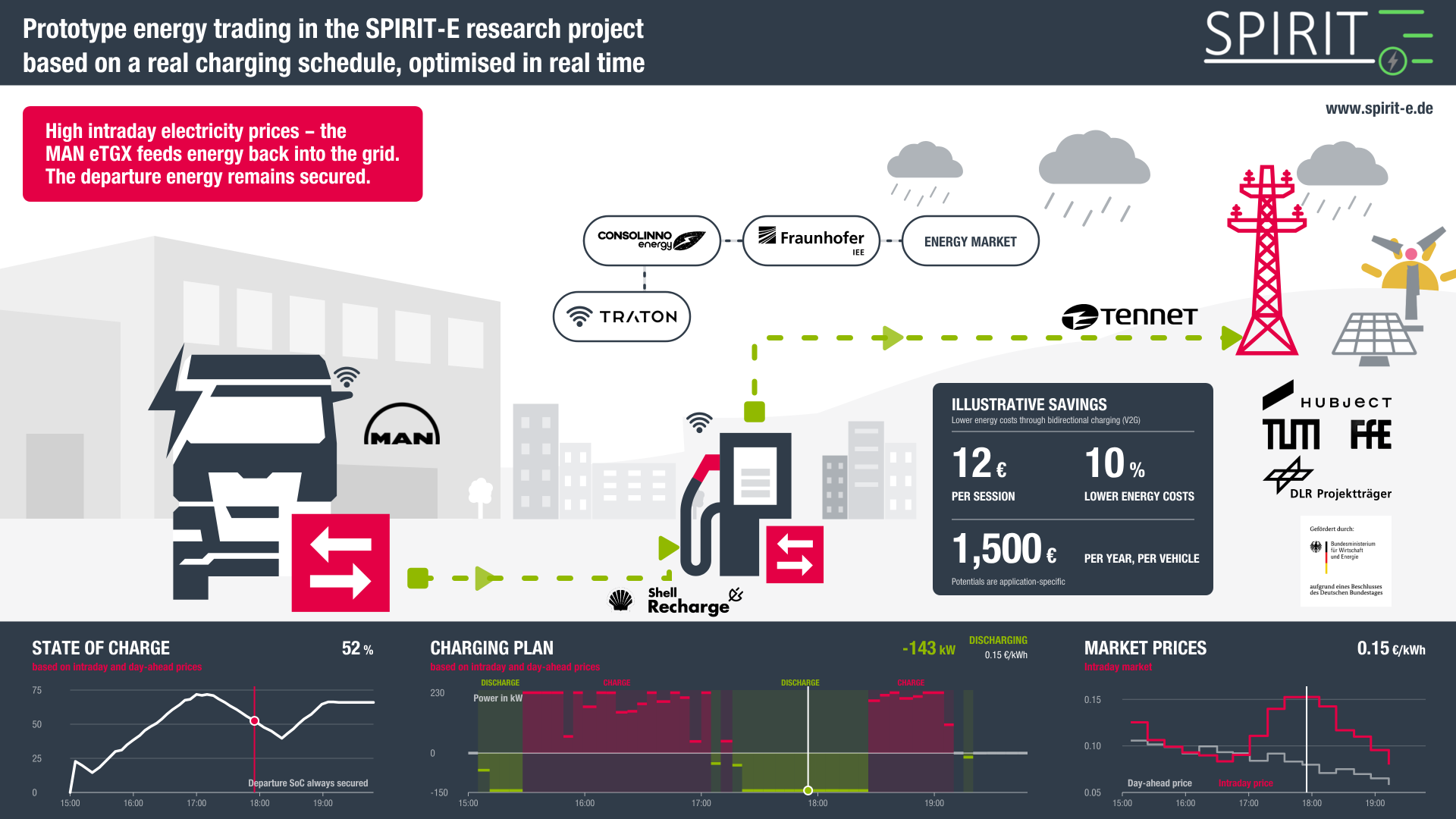
· Intelligent energy use can reduce energy costs by an average of ten percent
· First public demonstration of Vehicle-to-Vehicle, Vehicle-to-Site and Vehicle-to-Grid applications with battery-electric trucks
· The commercial viability of bidirectional charging depends on depot infrastructure and eTruck operating profiles
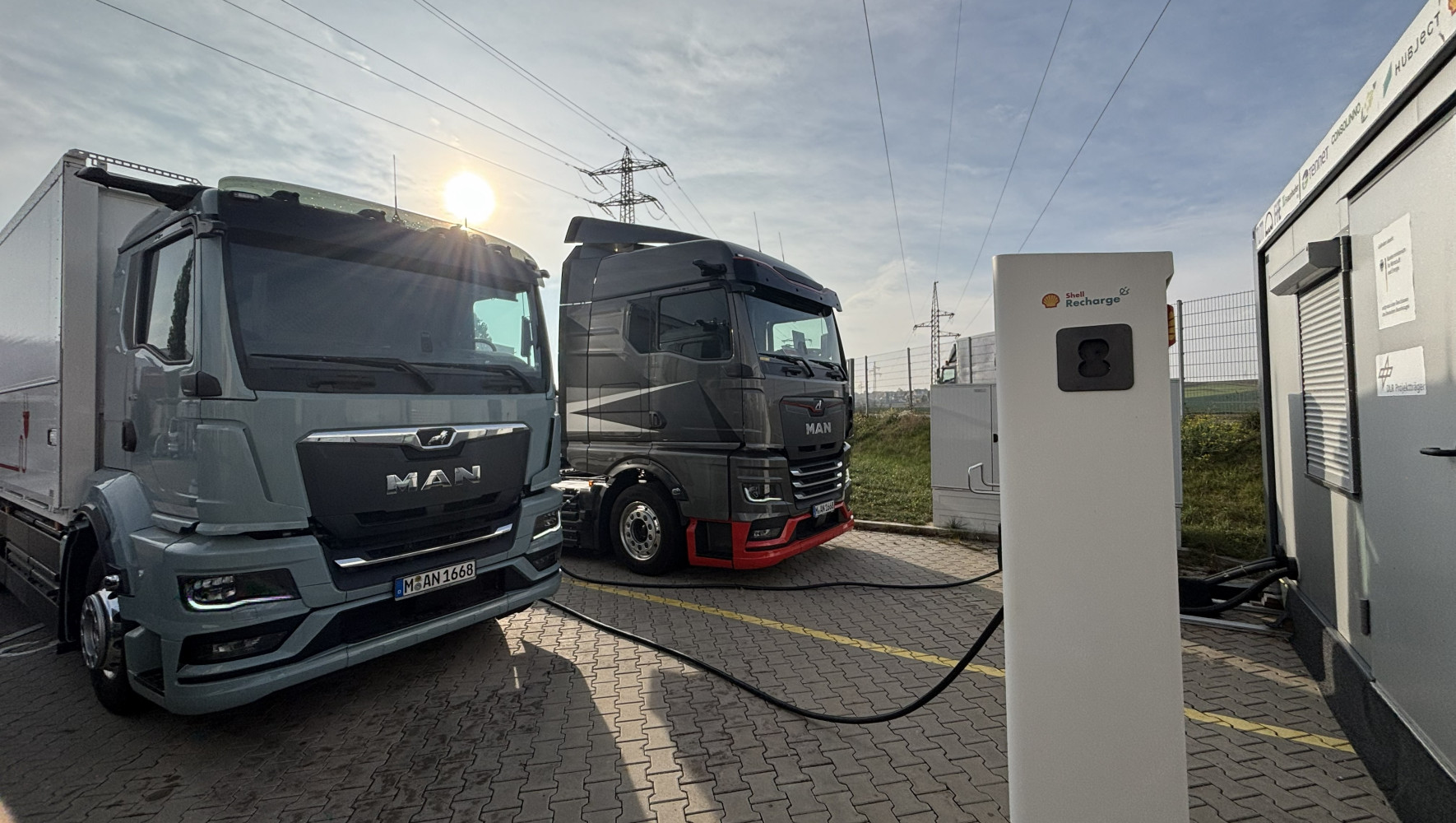
After three years, the SPIRIT-E research project, involving MAN Truck & Bus, has concluded with a clear result: electric trucks can do more than just charge electricity. They can also store energy and feed it back into the grid, further improving the economics of their operation. The project results were presented to the public on October 30, 2026.
Under the consortium leadership of the Technical University of Munich (TUM), eight project partners investigated bidirectional charging for electric trucks and tested it in a real-world environment at the Schmid logistics depot in Regensburg. The project also demonstrated how trucks can participate in electricity trading and support grid operators in stabilizing the power grid. At the same time, the project examined the conditions under which the technology can become economically viable for logistics companies, grid operators and solution providers, and identified the remaining challenges on the path to market readiness.
Georg Grüneißl, Head of Product Strategy at MAN Truck & Bus: “Through SPIRIT-E, the MAN eTGX has demonstrated that it can serve as a bidirectional energy storage system. We are now working to bring this feature into series production. At the same time, we are developing a consulting concept for our customers that will help them unlock the full potential of this rolling power bank.”
Technology: from the laboratory to real depot operations
Within the project, bidirectional charging functions were developed and tested both on the MAN eTGX and on mobile and stationary charging systems supplied by project partner SBRS. To achieve this, the partners coordinated the interfaces between the vehicle, charging station, charging operator control software, site energy management system, electricity trader and grid operator. Additional project outcomes included a charging station reservation system and software capable of optimally scheduling eTruck charging operations within a depot.
A central element of the project was the implementation of ISO 15118-20, the international standard governing communication between vehicles and charging infrastructure during charging and discharging operations. In the real-world test environment, a MAN eTGX with 480 kWh of usable energy fed electricity back through a bidirectional DC charging station at up to 350 kW into both the local energy network of the Schmid depot in Regensburg (V2S = Vehicle-to-Site) and the public power grid (V2G = Vehicle-to-Grid). The charging of other vehicles directly from the truck battery (V2V = Vehicle-to-Vehicle) was also successfully demonstrated.
Energy markets and grid services: first processes successfully validated
The project also explored how truck batteries can participate in energy markets. In a test environment provided by software company PowerBot, scenarios were simulated in which an eTruck purchases electricity when prices are low and sells it when prices are high. Using the European EQUIGY platform, the project further demonstrated how electric trucks can help grid operators balance bottlenecks within the electricity network. SPIRIT-E therefore confirms that the technical foundations for integrating electric trucks as flexible energy storage assets into the energy system are already in place. Depot charging, in particular, is highly predictable. As electric fleets continue to grow, they offer substantial potential to support grid stability.
Economic viability: not automatic, but promising
Whether bidirectional charging is economically attractive depends on a variety of user-specific factors, including operating profiles, annual mileage, dwell times, battery size, electricity prices, grid charges, on-site power generation such as photovoltaic systems, available grid connection capacity and the ability to monetize stored energy through electricity markets or grid services. Bidirectional charging is particularly attractive for electric trucks with regular depot dwell times and annual mileage below 100,000 kilometres. Vehicle-to-Site and Vehicle-to-Vehicle applications, in particular, offer significant savings potential. Internal project calculations indicate average savings of around ten percent, while under optimal conditions energy costs may be reduced by as much as 20 percent.
What is needed for market adoption
The project results show that the primary obstacles do not lie in the technology of electric trucks or charging stations. For successful market adoption, the industry requires simpler standards for flexible electricity trading, stronger digital integration between the logistics and energy sectors, and the development of expertise among fleet operators.
SPIRIT-E brought together eight partners: Consolinno Energy, Fraunhofer IEE, Hubject, the Research Center for Energy Economics (FfE), MAN Truck & Bus, the Technical University of Munich (consortium lead), TenneT and SBRS. The project was funded by the German Federal Ministry for Economic Affairs and Energy (BMWE), managed by DLR Project Management Agency, and ran from August 2023 to October 2026.