
MAN TGE model year 2027 boosts active safety
New assistance systems and extended functions support drivers in critical traffic situations.
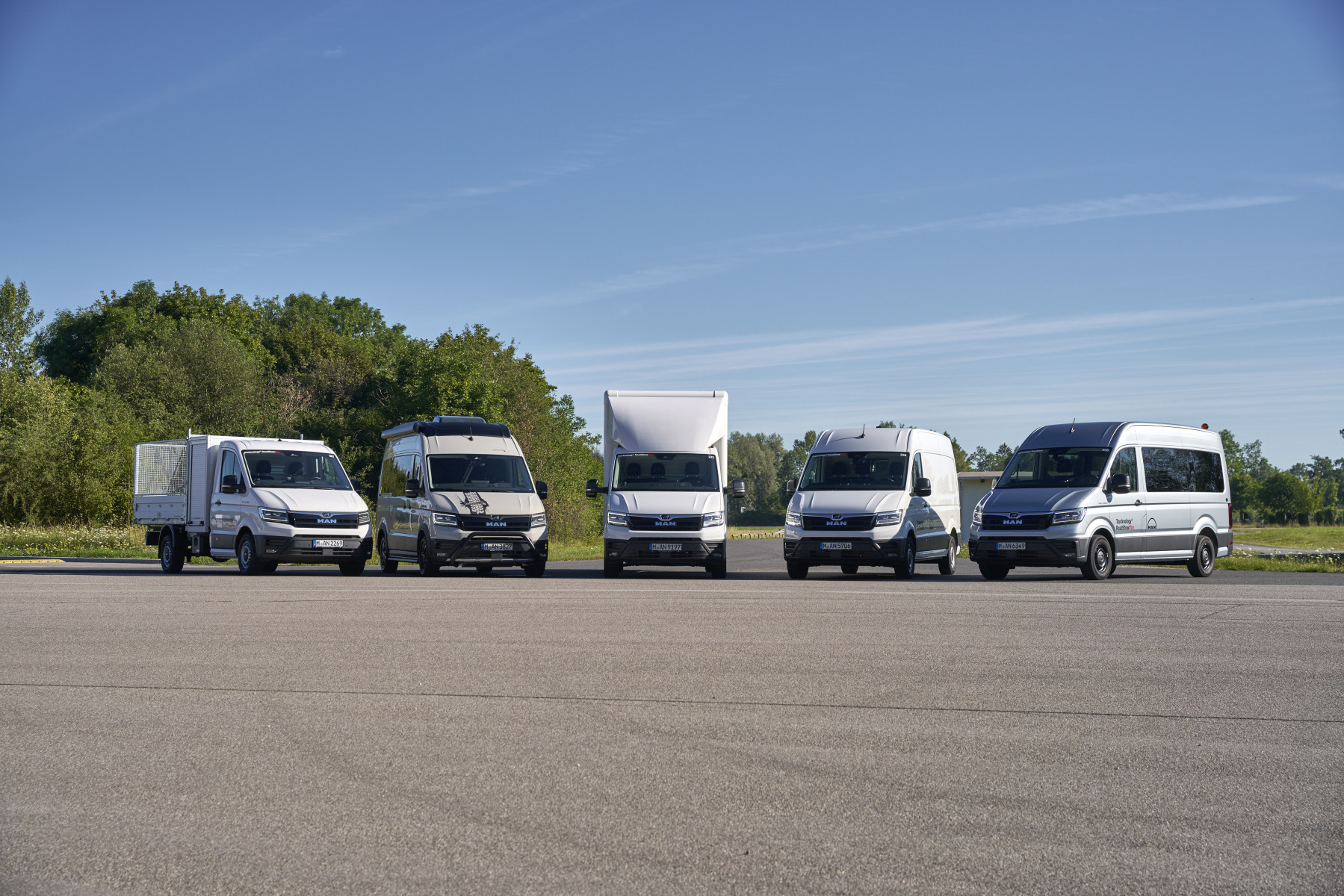
- Safety upgrades for the TGE in model year 2027: focus on driver assistance systems
- New systems such as the junction assist and enhanced fatigue detection increase protection in urban traffic
- New predictive ACC improves driving comfort
With model year 2027, MAN Truck & Bus is further increasing the active safety of its MAN TGE van. New assistance systems and extended functions address typical accident risks in delivery logistic and urban traffic. The focus is on improved situational awareness, earlier warnings and automated interventions at critical moments. Production of the new model year begins in early September in Września, Poland. "With model year 2027, we are noticeably increasing active safety in the MAN TGE once again. Our assistance systems support the driver exactly where the risk of accidents is highest," summarises Martin Imhoff, Head of Product Marketing & Product Management Van at MAN Truck & Bus.
A key element of the MAN TGE model year 2027 is the new junction assist. Within the limits of the system, it detects crossing traffic when entering junctions, warns the driver early, and can brake automatically if there is an acute risk of collision. The multi-stage warning logic increases transparency for the driver and reduces the risk of accidents in confusing situations.
In addition, attention and fatigue detection have been improved. A multifunction camera integrated into the interior mirror detects signs of fatigue and distraction, for example through gaze behaviour or eye activity. The system analyses only abstract states and does not store any personal data. Going forward, it will be fitted as standard in all vehicles and supports the driver through targeted warnings.
Existing driving functions are also being further developed. The Adaptive Cruise Control (ACC) function is being extended with predictive speed adjustment (for N1 vehicles up to 3.5t GVW only). The system now uses navigation and traffic data as well as camera-based traffic sign recognition to anticipate and adjust vehicle speed for bends, speed limits or junctions. This results in a smoother driving style with fewer braking manoeuvres and less strain on both the driver and the vehicle.